


Hey there! As a supplier of Heat Fusion Machines, I often get asked some pretty interesting questions. One question that's been popping up lately is, "Can a Heat Fusion Machine be used for fusion of magnetic materials?" Well, let's dive right into this topic and find out.
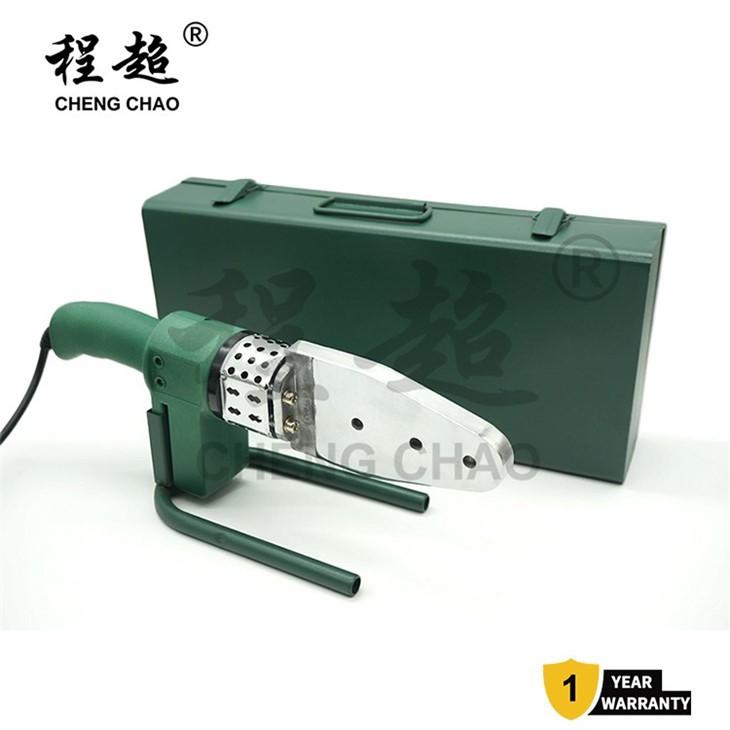
First off, let's understand what a Heat Fusion Machine is. A Heat Fusion Machine is a handy tool that uses heat to join two or more materials together. We've got different types of these machines in our stock. For example, there's the Automatic Fusion Machine. This one is super convenient and can handle certain types of materials with ease. Then, there's the Professional Fusion Machine for PPR, which is designed for more professional and precise jobs. And of course, we have the PPR Heat Fusion Machine, which is great for those who need it as part of a tool kit.
Now, let's talk about magnetic materials. Magnetic materials are substances that can be magnetized or attracted to a magnet. They have unique properties due to the alignment of their atomic magnetic moments. Some common magnetic materials include iron, nickel, and cobalt. These materials are used in a wide range of applications, from making magnets for motors to data storage in hard drives.
So, can a Heat Fusion Machine be used for the fusion of magnetic materials? The answer isn't a simple yes or no. It depends on a few factors.
One of the main factors is the melting point of the magnetic material. Different magnetic materials have different melting points. For example, iron has a melting point of around 1538°C, while nickel melts at about 1455°C. Our Heat Fusion Machines are designed to reach certain temperature ranges. If the melting point of the magnetic material is within the temperature range that our machine can achieve, then in theory, it could be used for fusion.
However, it's not just about reaching the melting point. Magnetic materials can also undergo changes in their magnetic properties when heated. When a magnetic material is heated above a certain temperature called the Curie temperature, it loses its magnetic properties. For iron, the Curie temperature is about 770°C. So, if we heat an iron-based magnetic material too much, it might lose its magnetic characteristics, which could be a problem depending on the application.
Another factor to consider is the chemical reactivity of the magnetic material. Some magnetic materials can react with the atmosphere or other substances when heated. For example, iron can oxidize when heated in the presence of oxygen, forming rust. This oxidation can affect the quality of the fusion and the properties of the final product. Our Heat Fusion Machines are designed to work in different environments, but we need to make sure that the magnetic material won't react in a way that ruins the fusion process.
Let's take a look at some possible applications where using a Heat Fusion Machine for magnetic materials could be useful. One application could be in the manufacturing of custom magnets. If you need to create a magnet with a specific shape or size, you could use our machine to fuse different magnetic components together. This could be a cost - effective and efficient way to produce small - batch custom magnets.
In the electronics industry, magnetic materials are used in transformers and inductors. Sometimes, these components need to be repaired or modified. Our Heat Fusion Machine could potentially be used to fuse damaged parts or add new magnetic elements to these components.

But we also need to be aware of the limitations. As I mentioned earlier, the change in magnetic properties and the potential for chemical reactions can be a drawback. In some cases, other methods like welding or using adhesives might be more suitable for joining magnetic materials.
If you're thinking about using our Heat Fusion Machine for the fusion of magnetic materials, it's important to do some tests first. You can start by testing a small sample of the magnetic material with our machine to see how it behaves. Check the temperature range, the quality of the fusion, and any changes in the magnetic properties.
We're always here to help you figure out if our Heat Fusion Machine is the right choice for your needs. Whether you're a small - scale hobbyist or a large - scale manufacturer, we can provide you with the information and support you need. If you're interested in learning more about our machines or want to discuss your specific requirements for fusing magnetic materials, don't hesitate to get in touch. We can have a detailed conversation about your project and see how our Heat Fusion Machines can fit into it.
In conclusion, while it's possible to use our Heat Fusion Machine for the fusion of magnetic materials in some cases, there are many factors to consider. The melting point, the change in magnetic properties, and the chemical reactivity all play important roles. But with proper testing and understanding, our machines can offer a viable solution for certain applications. So, if you're looking to explore the possibilities of fusing magnetic materials, give us a shout, and let's start a conversation about how we can work together.
References
- Principles of Magnetism and Magnetic Materials by David Jiles
- Materials Science and Engineering: An Introduction by William D. Callister Jr. and David G. Rethwisch