


Hey there! I'm a supplier of heat fusion machines, and today I wanna chat about whether a heat fusion machine can be used for the fusion of porous materials. It's an interesting topic that combines the tech of our machines with the unique properties of porous materials.
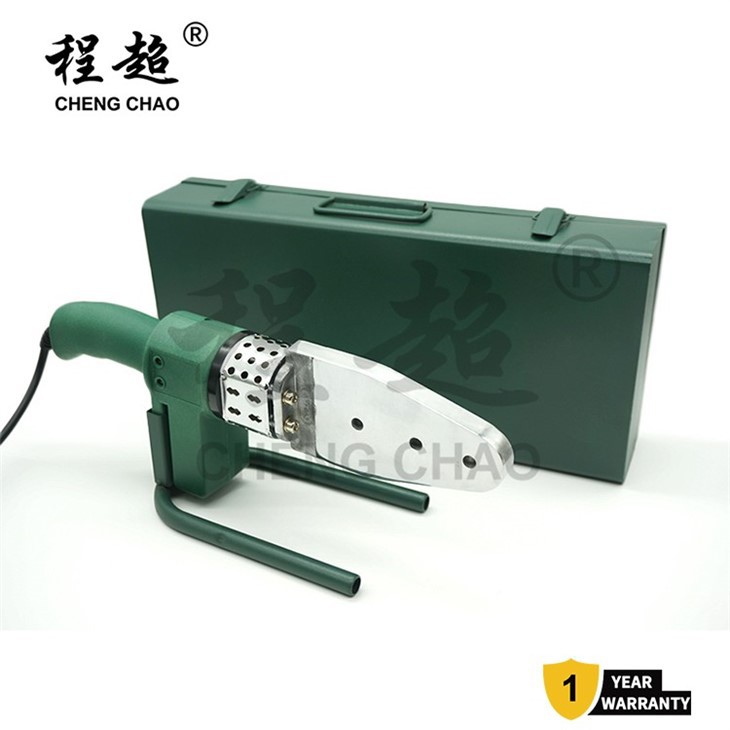

Let's start with the basics. A heat fusion machine, like the ones I supply, is mainly designed to join two pieces of material together by heating them to a melting point and then pressing them. Our PPR Heat Fusion Machine is a great example. It's specifically built for PPR pipes, which are smooth and have a relatively consistent structure.
But what about porous materials? These are materials that have lots of tiny holes or pores. Think of things like sponges, some types of rocks, or even porous plastics. The question is, can our trusty heat fusion machines work on such materials?
One of the big challenges with porous materials is the uneven heat distribution. When we use a heat fusion machine, it needs to heat the material evenly to ensure a proper fusion. With porous materials, the pores can act as insulators in some areas and heat conductors in others. This uneven heat transfer can lead to parts of the material melting too quickly while other parts don't melt at all.
For example, if we're trying to fuse two pieces of porous plastic using a Plastic Fusion Machine, the heat might get trapped in some of the pores, causing those areas to overheat and potentially burn. On the other hand, parts of the plastic without direct contact with the heating element might stay cool, resulting in a weak bond or no bond at all.
Another issue is the gas release. Porous materials often contain air or other gases within their pores. When heated, these gases expand and can create bubbles or voids in the fused area. This not only affects the appearance of the fusion but also weakens the overall strength of the bond. In a manufacturing setting, these defects could render the finished product unusable.
However, it's not all bad news. There are some ways we might be able to use heat fusion machines for porous materials. First, we can adjust the heating parameters. By lowering the heating temperature and increasing the heating time, we can try to achieve a more even heat distribution. This gives the heat more time to penetrate the pores and reach all parts of the material.
We can also pre - treat the porous materials. For instance, vacuuming the materials before the fusion process can remove some of the gases trapped in the pores. This reduces the likelihood of bubble formation during the fusion.
In some cases, using a filler material can be beneficial. The filler can fill the pores and create a more uniform surface for the heat fusion. This helps with both heat transfer and the strength of the bond.
Now, let's talk about the types of porous materials and how they might respond to heat fusion. Some porous polymers, for example, might be more amenable to heat fusion than others. Thermoplastic polymers with larger pores can sometimes be fused successfully with the right adjustments to the heat fusion process.
In the construction industry, porous concrete blocks are sometimes considered for joining. While our traditional heat fusion machines might not be the best option for concrete, there could be potential for using heat fusion techniques on porous polymer - based construction materials.
When it comes to the market, there's a growing interest in using porous materials in various applications. From filtration systems to lightweight structural components, the demand is increasing. This means that if we can figure out how to use heat fusion machines effectively on porous materials, there could be a big opportunity for us Fusion Machine Manufacturers.
We at my company are constantly working on research and development to make our heat fusion machines more versatile. We're conducting experiments with different types of porous materials and adjusting the settings of our machines to see what works best.
If you're in an industry that deals with porous materials and is interested in heat fusion, I'd love to have a chat with you. Whether you're a manufacturer looking to improve your production process or a researcher exploring new applications, we can work together to find solutions.
In conclusion, while using a heat fusion machine for the fusion of porous materials has its challenges, it's not an impossible task. With the right adjustments and techniques, we can potentially expand the capabilities of our heat fusion machines and open up new markets. So, if you think you could benefit from our heat fusion technology for your porous materials, don't hesitate to reach out. Let's start a conversation about how we can meet your needs and develop innovative solutions.
References
- "Materials Science and Engineering: An Introduction" by William D. Callister Jr. and David G. Rethwisch
- "Polymer Processing: Principles and Practice" by Christopher Rauwendaal