


Hey there! As a supplier of Plumbers Test Pumps, I often get asked about how to read the pressure gauge on these pumps. It's a crucial skill for anyone working with plumbing systems, whether you're a professional plumber or a DIY enthusiast. So, let's dive right in and break it down step by step.
First things first, let's talk about what a pressure gauge on a plumbers test pump actually does. It's like the eyes of the pump, giving you a clear picture of the pressure inside the plumbing system you're testing. This is super important because you need to make sure the pressure stays within the safe and recommended range. Too much pressure can cause pipes to burst, while too little might not give you an accurate test result.
Now, when you first look at a pressure gauge, it might seem a bit intimidating. There are all these numbers, lines, and sometimes even different units of measurement. But don't worry, it's not as complicated as it looks.
Most pressure gauges on plumbers test pumps have a circular face with a needle that moves around. The numbers on the gauge represent the pressure, and the needle points to the current pressure reading. The units of measurement can vary, but the most common ones are pounds per square inch (PSI) and bars.
Let's start with understanding the scale. The scale on the pressure gauge is divided into different increments. These increments are like little markers that help you read the pressure accurately. For example, if the gauge has an increment of 5 PSI, it means each small line on the gauge represents an increase or decrease of 5 PSI.
To read the pressure, you simply look at where the needle is pointing on the scale. If the needle is between two numbers, you need to estimate the reading based on the increments. For instance, if the needle is halfway between 20 and 25 PSI, you can estimate the reading to be 22.5 PSI.
It's also important to pay attention to the maximum and minimum pressure limits indicated on the gauge. These limits are there for a reason – they tell you the safe operating range for the pump and the plumbing system. Exceeding these limits can lead to serious problems, so always make sure you stay within them.
Now, let's talk about some practical tips for reading the pressure gauge accurately. First, make sure the gauge is clean and free from any dirt or debris. A dirty gauge can make it difficult to read the numbers and the needle clearly. You can use a clean, dry cloth to wipe the gauge gently.
Another tip is to position yourself so that you're looking directly at the gauge. Reading the gauge from an angle can cause an optical illusion, making the reading appear different from the actual pressure. So, get up close and look straight at the gauge for an accurate reading.
When you're using the plumbers test pump, it's a good idea to take multiple readings at different intervals. This helps you ensure that the pressure is stable and not fluctuating too much. If you notice significant fluctuations in the pressure reading, it could indicate a problem with the plumbing system or the pump itself.
Let's also touch on the different types of pressure gauges you might encounter. Some gauges are analog, which means they have a traditional needle and scale. These are the most common type and are relatively easy to read. On the other hand, there are also digital pressure gauges that display the pressure reading as a number on a screen. Digital gauges can be more precise, but they also require a power source, such as batteries.
Now, I want to mention some of the great Plumbers Test Pumps we offer. We have the 70Psi Water Pressure Test Pump, which is perfect for testing plumbing systems that require higher pressure. It's a reliable and durable pump that comes with a high - quality pressure gauge for accurate readings.
If you're looking for something with a lower pressure range, our 40 Bar Water Pressure Testing Pump is a great option. It's a manual pump that's easy to operate and is equipped with a clear and easy - to - read pressure gauge.
And of course, our general Plumbers Test Pump is a versatile choice that can handle a wide range of plumbing testing tasks. It's designed with the user in mind, and the pressure gauge is calibrated for maximum accuracy.
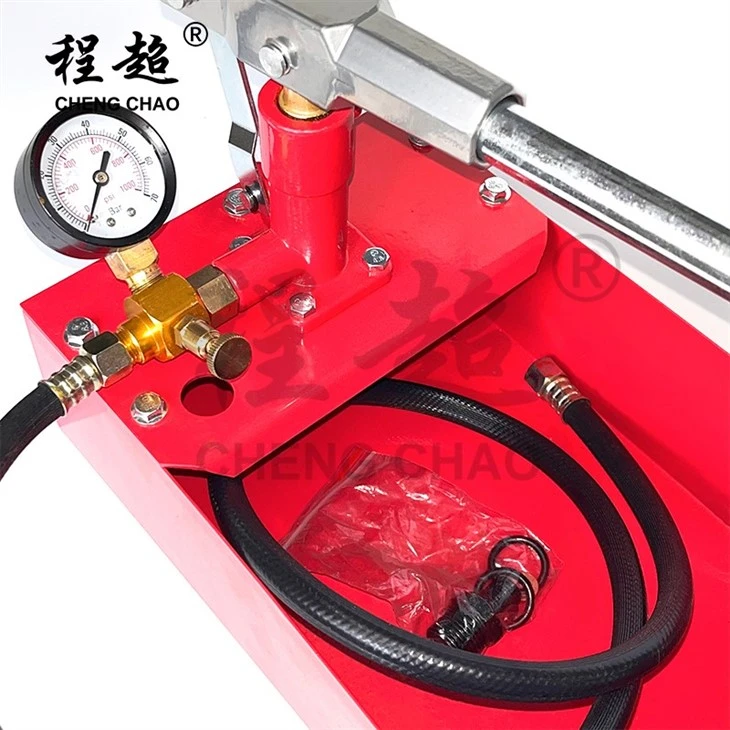

In conclusion, reading the pressure gauge on a plumbers test pump is an essential skill. By understanding the scale, paying attention to the limits, and following some simple tips, you can ensure that you're getting accurate pressure readings. Whether you're a professional or a DIYer, having the right Plumbers Test Pump with a reliable pressure gauge is crucial for successful plumbing testing.
If you're interested in purchasing a Plumbers Test Pump or have any questions about our products, feel free to reach out to us. We're here to help you find the perfect pump for your needs and provide you with all the support you need.
References
- General knowledge of plumbing and pressure testing equipment.
- Manufacturer's manuals for plumbers test pumps.