


Hey there! I'm a supplier of Heat Fusion Machines, and today I'm super excited to break down how these nifty devices work. Heat fusion machines are pretty amazing pieces of tech that play a huge role in a bunch of industries, especially in plumbing and plastic fabrication.
So, let's start with the basics. At its core, a heat fusion machine is all about joining two pieces of thermoplastic materials together. Thermoplastics are plastics that can be melted and reshaped when heat is applied, and they solidify again when they cool down. This property is what makes heat fusion possible.
The first step in the heat fusion process is preparation. You've got to make sure the surfaces of the thermoplastic pieces you want to join are clean and free of any dirt, grease, or debris. Even a tiny bit of contamination can mess up the fusion, so it's crucial to give them a good wipe down. Once they're clean, you measure and cut the pieces to the right size and shape. Precision is key here because if the pieces don't fit together properly, the fusion won't be as strong.
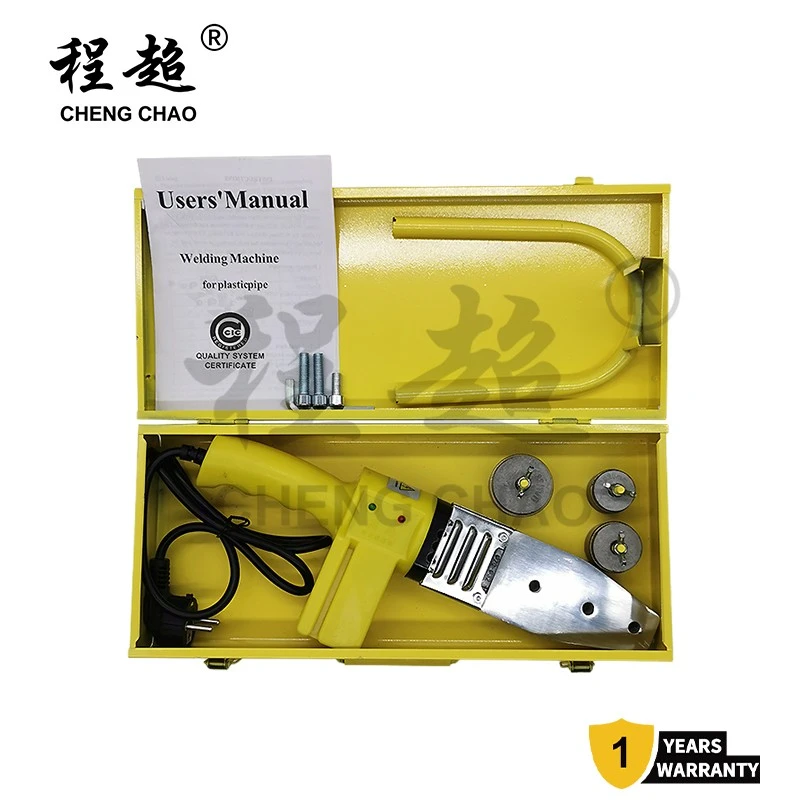
Now, let's talk about the machine itself. Most heat fusion machines have a heating element. This is like the heart of the machine. The heating element gets really hot, usually up to a specific temperature that's right for the type of thermoplastic you're working with. Different plastics have different melting points, so the machine needs to be set to the correct temperature. For example, if you're working with PPR (polypropylene random copolymer) pipes, the machine will be set to a temperature around 260 - 270 degrees Celsius.
Once the heating element has reached the right temperature, you insert the ends of the thermoplastic pieces into the heating element. The heat from the element starts to melt the surfaces of the pieces. It's important to keep them in there for the right amount of time. If you leave them in too long, the plastic can overheat and become damaged. If you don't leave them in long enough, the plastic won't melt properly, and the fusion won't hold.
After the plastic has melted to the right consistency, you quickly remove the pieces from the heating element. This part is a bit of a race against time because the plastic starts to cool down as soon as it's out of the heat. You then press the two melted ends together firmly. The pressure helps to spread the melted plastic evenly and creates a strong bond between the two pieces. You have to hold them in place for a little while until the plastic cools and solidifies. This is called the cooling time, and it's just as important as the heating time.
There are different types of heat fusion machines, and each has its own way of doing things. For instance, some are manual, where you have to do a lot of the work like inserting the pieces into the heating element and applying the pressure by hand. These are usually smaller and more portable, which makes them great for on - site jobs. On the other hand, there are automatic heat fusion machines. These are more high - tech and do a lot of the work for you. They can control the heating time, the temperature, and even the pressure automatically.
Let's take a closer look at some of the products we offer. If you're in the market for a PPR Pipe Welding Machine, we've got a great one at PPR Pipe Welding Machine. This machine is designed specifically for welding PPR pipes and is really easy to use. It has a precise temperature control system, so you can be sure that the pipes will be welded perfectly every time.
Another cool product is our 32mm Automatic Fusion Machine. This machine is great for smaller projects where you need to weld 32mm pipes. It's fully automatic, which means you don't have to worry about all the little details. Just set it up, and it'll do the rest.
And if you're looking for something more powerful, our 1500 Watt Plastic Welding Kit is the way to go. With 1500 watts of power, it can heat up quickly and handle larger pieces of plastic. It's perfect for big - scale projects.
Heat fusion machines are used in a wide range of applications. In the plumbing industry, they're used to join PPR pipes for water supply systems. PPR pipes are popular because they're durable, corrosion - resistant, and easy to install. Heat fusion creates a leak - proof joint, which is essential for a reliable water supply. In the plastic fabrication industry, heat fusion machines are used to make all sorts of plastic products, like plastic tanks, containers, and even furniture parts.
One of the biggest advantages of using a heat fusion machine is the strength of the joint it creates. When two pieces of thermoplastic are fused together using a heat fusion machine, the bond is as strong as the original material. This means that the joined pieces can withstand a lot of pressure and stress without breaking or coming apart. Another advantage is that the joints are seamless. There are no gaps or seams where dirt or bacteria can accumulate, which is especially important in applications like water pipes.
However, there are also some challenges when using heat fusion machines. One of the main challenges is getting the temperature and time settings right. As I mentioned earlier, different plastics have different melting points, and each project may require slightly different settings. It takes some practice and experience to get it just right. Another challenge is dealing with the heat. The heating element can get extremely hot, and there's a risk of burns if you're not careful. That's why it's important to wear the right safety gear, like heat - resistant gloves.
In conclusion, heat fusion machines are incredible tools that have revolutionized the way we join thermoplastic materials. Whether you're a professional plumber or a plastic fabricator, having a good heat fusion machine can make your job a whole lot easier and more efficient. If you're interested in any of our heat fusion machines or have any questions about how they work, don't hesitate to reach out. We're here to help you find the right machine for your needs and make sure you get the most out of it. Let's start a conversation about your project and see how our heat fusion machines can be a part of it.
References

- Textbooks on thermoplastics and plastic joining techniques
- Industry standards and guidelines for heat fusion processes