


Hey there! As a supplier of PPR Fusion Sockets, I often get asked about the cooling time after fusing with a PPR fusion socket. It's a crucial topic, especially for those in the plumbing and piping industry. So, let's dive right in and explore this in detail.
First off, what exactly is a PPR Fusion Socket? Well, it's an essential tool used for joining PPR (polypropylene random) pipes. These sockets work by heating the pipe and the fitting to a specific temperature and then fusing them together to create a strong, leak - proof connection. The process is called Fusion Socket Welding, and it's widely used in residential and commercial plumbing systems.
Now, onto the cooling time. The cooling time after fusing with a PPR fusion socket is the period during which the fused joint needs to be left undisturbed to allow the material to solidify and form a durable bond. This time is super important because if you try to move or put stress on the joint before it's fully cooled, it can weaken the connection and lead to leaks down the line.
Several factors can influence the cooling time. One of the main factors is the ambient temperature. In colder environments, the cooling time will be shorter because the heat dissipates more quickly. On the other hand, in warmer conditions, the cooling process takes longer. For instance, if it's a hot summer day, the joint might take 10 - 15 minutes to cool properly, while in a cold winter, it could be as short as 5 - 8 minutes.
The size of the pipe and fitting also matters. Larger diameter pipes and fittings hold more heat and thus require more time to cool. A small 20mm pipe might cool in just a few minutes, but a 63mm or 75mm pipe could take 15 - 20 minutes or even longer.
The thickness of the PPR material is another factor. Thicker pipes and fittings have more mass, which means they retain heat for a longer time. So, if you're working with thick - walled PPR pipes, expect a longer cooling time compared to thin - walled ones.
Let's talk about some general guidelines for cooling time. For pipes with a diameter of up to 25mm, in normal room temperature (around 20 - 25°C), a cooling time of 3 - 5 minutes is usually sufficient. For pipes between 32mm and 50mm, you should allow 5 - 10 minutes. And for pipes larger than 50mm, 10 - 20 minutes is a good rule of thumb. But remember, these are just rough estimates, and you need to consider the actual conditions on - site.
It's also important to note that during the cooling process, you should avoid any kind of movement or vibration. This means no bending, twisting, or applying pressure to the joint. If you're working on a large plumbing system, it might be a good idea to mark the joints and put up some barriers to prevent accidental interference.
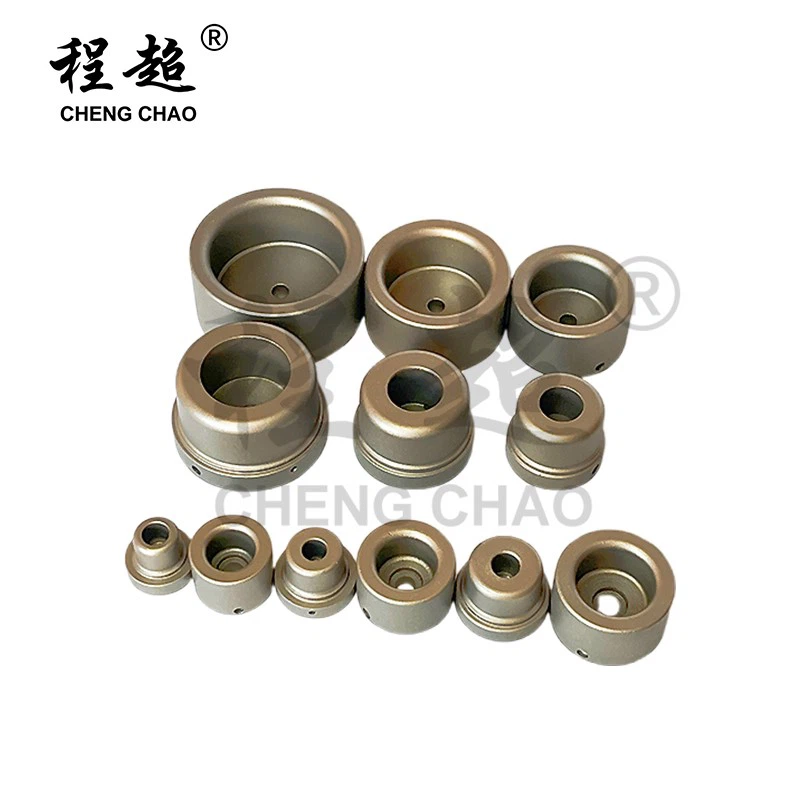

Now, as a PPR Fusion Socket supplier, I know how important it is to have the right tools for the job. Our PPR Fusion Sockets are made with high - quality materials and are designed to provide a consistent and reliable fusion. We also have a range of Plastic Pipe Welding Sockets that are suitable for different pipe sizes and applications.
If you're in the market for top - notch PPR fusion sockets, look no further. We've got the experience and the products to meet your needs. Whether you're a professional plumber or a DIY enthusiast, our products will help you get the job done right.
So, if you're interested in learning more about our PPR Fusion Sockets or have any questions about the cooling time or the fusion process in general, don't hesitate to reach out. We're here to help you make the best choices for your plumbing projects.
In conclusion, understanding the cooling time after fusing with a PPR fusion socket is essential for creating strong and reliable pipe connections. By considering factors like ambient temperature, pipe size, and material thickness, you can ensure that your joints are properly cooled and will last for years to come.
If you're ready to take your plumbing projects to the next level, contact us today to discuss your procurement needs. We're eager to work with you and provide you with the best PPR Fusion Sockets on the market.
References
- Plumbing Handbook: General Guidelines for PPR Pipe Installation
- Manufacturer's Specifications for PPR Fusion Sockets